The Next TokenLearnBookArchive
Saved

Tuesday, August 4, 2026 · about a 2 minute read

Bigger Models, Smaller Footprints

Today's news keeps circling the same quiet tension: AI systems are getting more capable, but the interesting action is in making them lighter, more honest, and useful to more people.

Get the calm version of AI news.

One email a day on what is actually happening in AI, in plain English. No hype, no doom.

Free. One calm email a day. No hype, no doom.

Hacker NewsResearch
LLMs reward expertise

A well-upvoted essay argues that AI tools reward people who already know their domain deeply, because they can spot bad output, ask precise questions, and steer the model usefully. If you are a beginner handing the wheel to AI, you may not even know when it has driven you off the road.

Read
Simon WillisonSafety
Don't be a meat proxy

Simon Willison flagged a new term worth knowing: 'meat proxy,' meaning a person who just copies AI output and passes it along without reading it. It is a funny phrase for a real problem, and if your job involves reviewing or communicating anything, it describes a failure mode you have probably already seen.

Read

Get this every morning.

arXiv cs.CLResearch
Verification Without Sufficiency: Per-Chunk Filtering Fails on Multi-Hop RAG, and Decomposition Repairs It

RAG (retrieval-augmented generation) is how AI tools look things up before answering, like a researcher pulling files before writing a report. This paper shows that checking each file one at a time fails for complex questions that require connecting two or more sources together, the way a good answer about a legal case might need three separate documents to add up. Understanding this helps you know why an AI tool can confidently give you a wrong answer even when the right information was technically available to it.

Read
Want the slow, plain-English version of why this matters? This is exactly the kind of idea the book was written to unpack, one light-switch analogy at a time.JPWExplained properly in the book
arXiv cs.CLSafety
A Few Neurons Reveal When LLMs Misuse Tools: Sparse Detection and Selective Steering for Reliable Tool Use

Researchers found that a small, specific cluster of neurons inside a model can reliably predict when it is about to misuse a tool, like calling an API it should not or skipping one it should. This is early work, but the idea that misbehavior leaves a detectable fingerprint inside the model is the kind of thing that could eventually make AI much safer to deploy in real workflows.

Read

That's today. See you tomorrow.

Get this every morning.

One email a day on what is actually happening in AI, in plain English. No hype, no doom.

Free. One calm email a day. No hype, no doom.

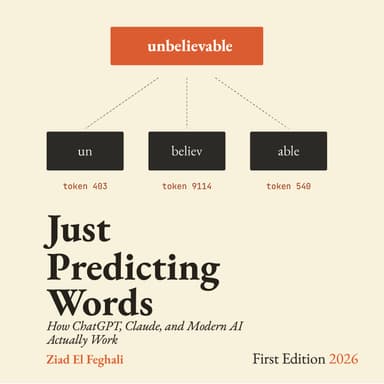
Just Predicting Words book cover

The book behind this newsletter

Just Predicting Words

How ChatGPT, Claude, and Modern AI Actually Work

The trick is small. The world it built is not.

PaperbackKindleAudiobook · SpotifyAudiobook · Google Play