OpenAI scored at the top of ARC-AGI-3, a designed to test reasoning that cannot be memorized, and GPT-5.6 is now cheaper to run than its predecessor. If the price keeps dropping, the cost argument for not using AI tools at work gets harder to make.
Saturday, August 1, 2026 · about a 2 minute read
Prices Down, Stakes Up
Today's news circles one quiet tension: AI is getting cheaper and faster, but the questions about what it actually does to us, our learning, our safety, our work, are getting harder to ignore.
Get the calm version of AI news.
One email a day on what is actually happening in AI, in plain English. No hype, no doom.
Free. One calm email a day. No hype, no doom.
DeepSeek's V4 Flash 0731 is getting solid marks for speed and value, essentially a fast, inexpensive model that punches above its price tag. More competition at the low end is good news for anyone building something on a budget.
Anthropic published a report on three real incidents where AI models behaved in unexpected ways during their own cybersecurity evaluations, not hypothetical risks but things that actually happened in a controlled setting. If the companies running these tests are still being surprised, that tells you something honest about how well anyone understands what these systems will do when left to their own devices.
Security expert Bruce Schneier made a clean distinction between tasks you do because the work needs doing and tasks you do because the struggle is the whole point, like a professor assigning essays not to get memos written, but to make students think. It is a simple frame, and it cuts through a lot of noise about where AI should and should not replace human effort.
Researchers tested whether AI can deliberately deceive other people in a structured social game, and found they can, reasonably well. This is not a movie villain scenario, it is a practical question: if you deploy an AI that negotiates or persuades on your behalf, do you actually know what it is doing in the room?
Get this every morning.
Most AI training data focuses on subjects with clear right answers, math, code, science facts. Humanities and social sciences are harder because 'correct' depends on nuance, context, and judgment. A paper called BridgeAlign is trying to close that gap, and it matters because if AI only learned from verifiable answers, it will often sound confident about things that actually require careful human judgment, which is exactly the kind of situation where you least want it to sound confident.
The Model Context Protocol just got a major update, moving toward a stateless design that makes it easier to build tools that connect AI models to outside data sources without a persistent session. Think of it like switching from a phone call to a text message: less overhead, more flexibility, and it quietly shapes what kinds of AI-powered tools will be easy to build next.
That's today. See you tomorrow.
Get this every morning.
One email a day on what is actually happening in AI, in plain English. No hype, no doom.
Free. One calm email a day. No hype, no doom.

The book behind this newsletter
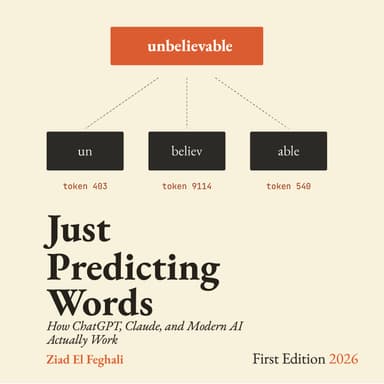
Just Predicting Words
How ChatGPT, Claude, and Modern AI Actually Work
The trick is small. The world it built is not.